The Composition Is Visible. The Path Is Discovered.
Why Discovery begins with a composition you can already see, and invites you to find your own way to it.
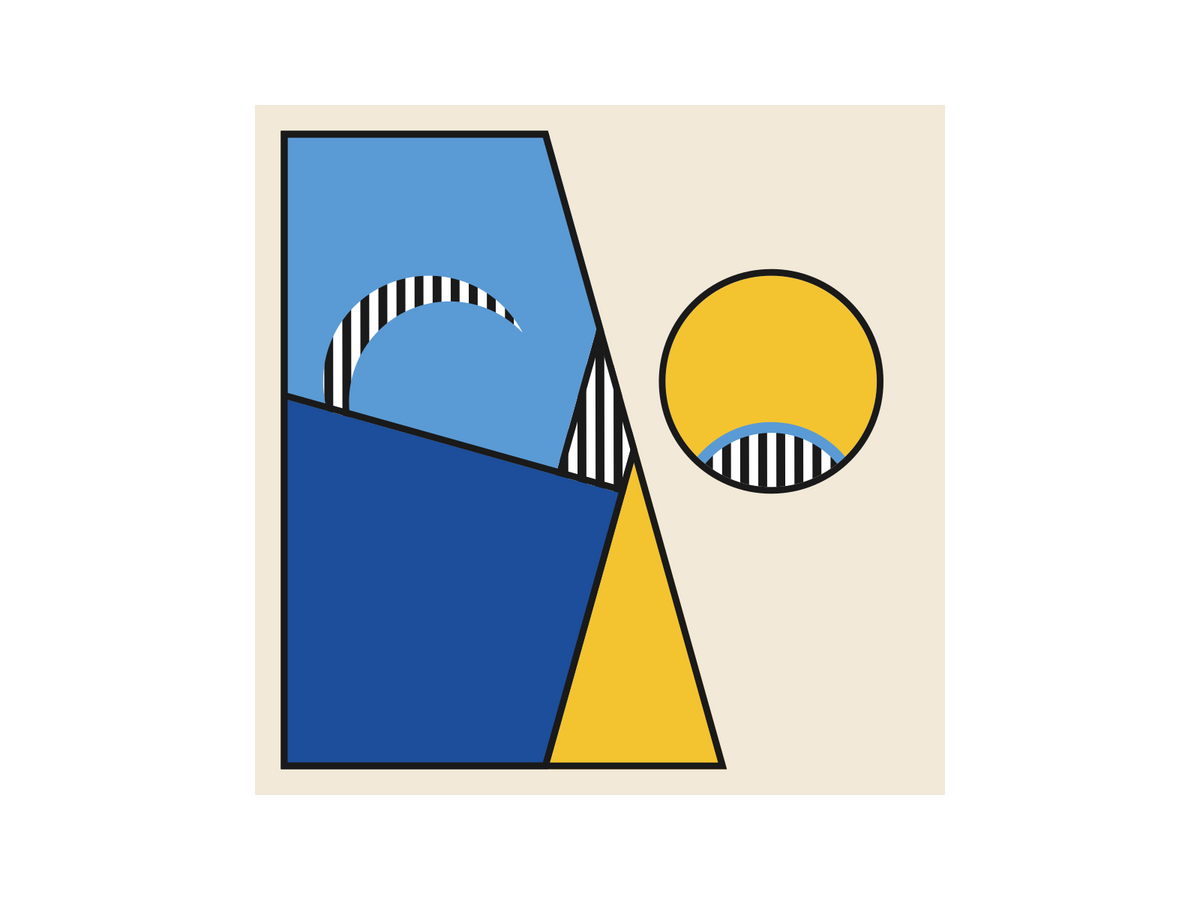
There is something unusual about the beginning of Discovery: you can already see the composition. It is there before you make a single move. The shapes, colors and spaces are visible. You know where you are going.
What you do not yet know is how you will get there.
That distinction has become central to how I think about Moon & Piano. Discovery presents a destination and invites you to find a path. Five layers begin in a common arrangement. Through rotation and reflection, you bring them into the arrangement in front of you.
At first, you may notice a large field of color or the position of a circle. Then a smaller relationship asks for attention: an edge passing through an opening, a stripe appearing where you expected a solid shape, a space that changes when a layer turns. The composition gives you information. You decide what to do with it.
The actions are simple. Understanding their consequences takes looking.

One layer can change several parts of the image at once. A turn that seems right in one place may create a different relationship somewhere else. You return your attention to the whole, then to a detail. You form an idea, act on it, and look again.
I am interested in that exchange between attention and action. Each makes the other more informed. The image remains visible, but your understanding of it changes.
Every participant begins at the same origin. Even with the same composition in view, people can notice different things first and choose different sequences. The destination is shared. The path belongs to the person taking it.
This is also why the word discovery matters to me. There is no concealed picture waiting to be uncovered. What becomes apparent is a relationship: between one orientation and another, between a part and the whole, between what you expected and what you actually see.
Moon & Piano contains a complete field of compositions formed from five layers. Discovery offers a way to spend time with one of them. It gives looking a consequence. A decision changes the image; the changed image gives you a reason to look again.
When the composition resolves, the image is the one you were shown at the beginning. Yet you have encountered its structure through your own actions. You have spent time with its relationships.
The composition is visible. The path is discovered.